Most people looking for a Paris apartment start in the arrondissements they already know by name, and most of them are disappointed by what their money buys there.
The 12th is where a good number of them end up instead. It runs from the Bastille east to the city boundary and south to the Seine, and it contains the largest green space in Paris, a four-kilometre elevated park, two mainline stations and some of the most liveable residential streets in the city — at prices that are meaningfully below the Paris average.
It is not a tourist arrondissement. That is precisely the point.
What it costs
Apartments across Paris averaged around €9,630 a square metre in October 2026, and the market has been flat to slightly falling for two years rather than running away.
In the Daumesnil–Picpus quarter, where our own listing sits, the average from notarial transaction data at the start of November 2026 was €9,019 a square metre, with the range running from about €6,567 to €11,002 depending on the building, the floor and the condition.
That spread tells you where the opportunity is. An apartment at the top of the range is finished, has a lift, faces south and needs nothing. One at the bottom needs work. The gap between the two is considerably larger than the cost of doing the work, which is the single most useful fact about buying in Paris today.
The four quarters
The 12th divides into four official quarters and they are genuinely different places.
Picpus is the largest and the most residential — wide boulevards, 1930s and post-war apartment blocks with balconies, quiet side streets, schools and ordinary shops. It is where Parisian families live rather than where visitors go. The Cimetière de Picpus is one of the strangest and most moving corners of the city: a private cemetery holding the mass graves of more than a thousand people guillotined in 1794, and the grave of Lafayette, over which an American flag has flown continuously for two centuries.
Bel-Air, to the east, backs onto the Bois de Vincennes and is the greenest and quietest part of the arrondissement.
Quinze-Vingts, in the north-west, is the busy end — Bastille, the Opéra Bastille, the Marché d'Aligre, and the start of the Coulée verte. It is the liveliest and the most expensive.
Bercy, along the river, is the modern one: the Parc de Bercy, the old wine warehouses of Bercy Village converted into shops and restaurants, the Accor Arena, and the Ministry of Finance.
The green
This is what people do not expect from Paris.
The Bois de Vincennes is the largest park in the city — getting on for a thousand hectares on the eastern edge of the 12th, with four lakes, a zoo, a racecourse, a Buddhist temple, the floral park and enough woodland paths to get properly lost in. Parisians run, cycle, row and picnic there, and in the summer it is where the city goes to breathe.
The Coulée verte René-Dumont, still widely called the Promenade Plantée, runs nearly five kilometres from the Bastille to the city boundary along a disused railway viaduct. It opened in 1993 and was the first elevated park anywhere in the world; New York's High Line was built two decades later in conscious imitation of it. Walking it, you are three storeys up, in a continuous corridor of roses, limes and bamboo, looking into the first-floor windows of apartment buildings. Underneath, the arches of the viaduct hold the Viaduc des Arts — craft workshops, luthiers, cabinetmakers, upholsterers.
Then the Parc de Bercy, the Jardin de Reuilly, and the simple fact that the boulevards here are planted with mature trees, which a great many Paris streets are not.
Getting around
The 12th is extremely well connected, which is a large part of what makes it work.
Daumesnil station puts you on lines 6 and 8. Line 6 is the one that runs above ground across the south of the city, past the Eiffel Tower — the best métro journey in Paris and worth the ticket on its own. Line 8 runs north-west through the centre.
Gare de Lyon is in the arrondissement, which means TGVs to Lyon, Marseille, Nice, the Alps, Geneva and Italy start from your own neighbourhood. Gare de Bercy handles services to the Auvergne and Burgundy. Nation is a major interchange on the eastern edge, with the RER A to La Défense and Disneyland.
For a second home, that matters more than it first appears. You can be at Gare de Lyon in minutes and in Provence in three hours.
Shopping, eating and markets
The Marché d'Aligre is the one everyone names — a covered hall plus an open-air market and a flea market in the same square, and one of the few genuinely popular, genuinely cheap markets left in central Paris. It is noisy, crowded and excellent.
Beyond it, the 12th does the ordinary things well: boulangeries on street corners, real butchers and fishmongers, a covered market at Beauvau, the restaurants around Aligre and Daumesnil, and Bercy Village for the modern version, in converted nineteenth-century wine stores.
Le Train Bleu, the restaurant on the upper floor of Gare de Lyon, is one of the most extravagant dining rooms in Europe — gilt, frescoes and chandeliers in a working station. It is worth seeing even if you only have a coffee.
Who the 12th suits
It is consistently described as one of the most family-friendly arrondissements, and the reasons are practical rather than sentimental: schools at every level, parks you can actually reach on foot, wide pavements, residential streets with little through traffic, and a resident population that lives there all year rather than letting to tourists.
It suits people who want to be in Paris rather than in a postcard of Paris. If your priority is a Haussmann façade on a street in a guidebook, you will pay considerably more in the 6th or the 7th for less space. If your priority is a balcony, a park, a métro at the door and a quarter that is alive in February, the 12th is one of the best-value propositions in the city.
The honest caveat is architectural. Much of Picpus and Bel-Air was built in the twentieth century, not the nineteenth. You will find good 1930s buildings with balconies and generous windows, and you will find post-war blocks that are unremarkable from the street but light, well-planned and quiet inside. If you want parquet, mouldings and a marble fireplace, look at the Quinze-Vingts end and expect to pay for it.
A word on energy ratings
Any Paris apartment you look at will carry a DPE, the energy rating from A to G, and in a city of old buildings with collective heating a great many of them sit at D, E or F.
The rules now have consequences. A property rated G may not be let at all, F follows in 2028 and E in 2034. Selling a property rated E, F or G also requires an energy audit to be commissioned and given to the buyer.
For a buyer this is leverage rather than a reason to walk away, particularly in a building with collective heating where the rating reflects the whole block rather than your own flat. It is one of the clearest reasons why an apartment needing work sells below the quarter average — and why the gap is often worth taking.
Our own apartment in the 12th
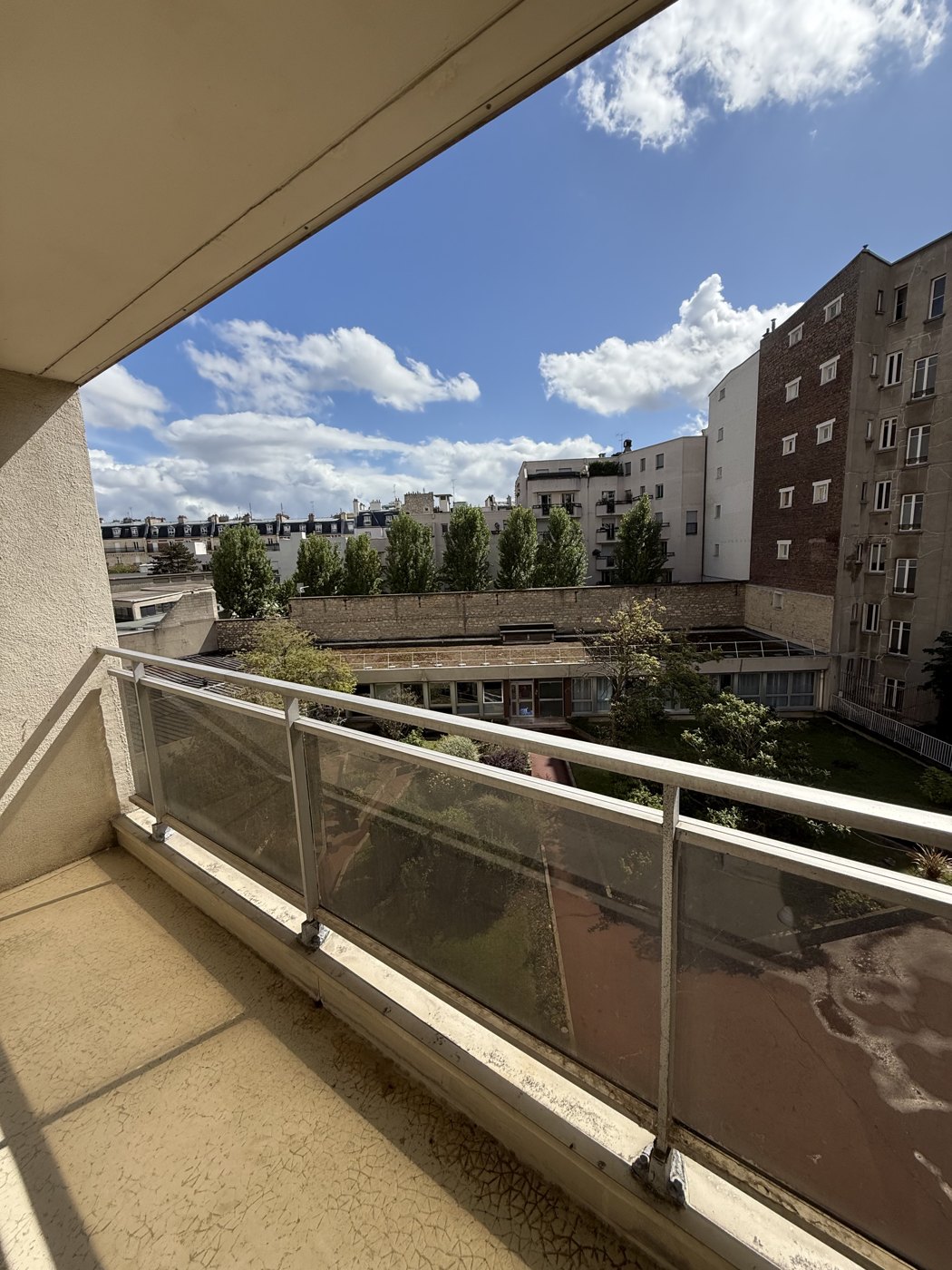
We currently have a three-room apartment of 67.06 m² for sale on Boulevard de Reuilly, in the Picpus quarter, one minute's walk from Daumesnil métro.
Third floor, a living room of over 17 m² opening onto its own private balcony above the tree-lined boulevard, two bedrooms, separate kitchen, shower room, dressing room and separate WC — with a private cellar and a secure underground parking space both included, which in central Paris is genuinely unusual.
It is a private sale with no agency fees, at €570,000. That works out at roughly €8,500 a square metre, against a quarter average of €9,019, and the reason is straightforward: it needs updating. We can carry out that work for you, from a refresh to a full renovation, managed from start to finish.
See the full details and photographs, and ask us for the short film of the apartment before you arrange a visit.
French Life Club works across France, from new builds in Brittany, Normandy and the Vendée to renovation and project management in Paris. Book a free half-hour, or reach us on WhatsApp or by email for a same-day reply.