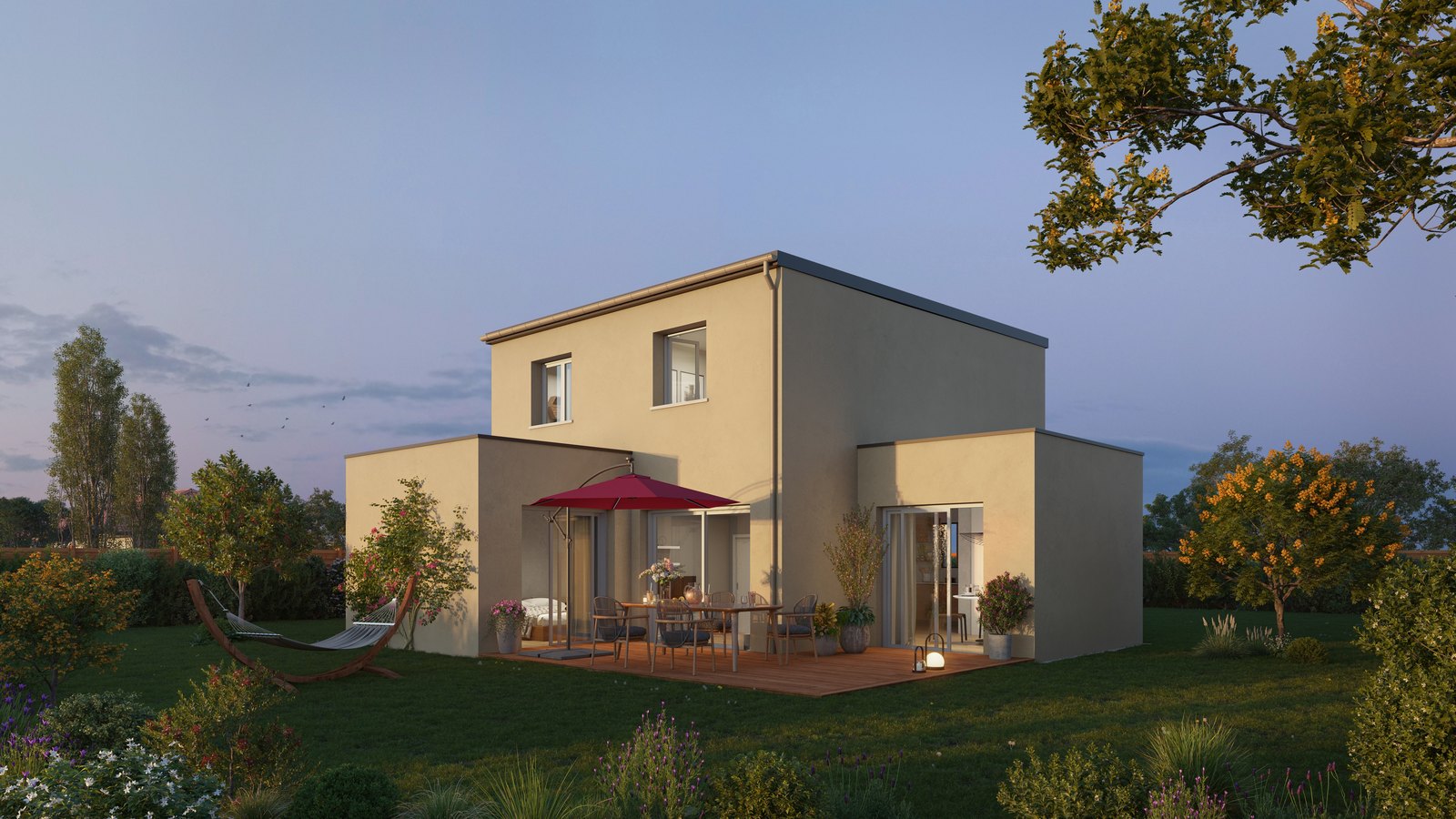
If you have ever pictured a home in Brittany where the sea is on both sides, oysters come out of the water at your feet, and the light off the Gulf of Morbihan turns the whole landscape gold at the end of the day, you have almost certainly found yourself looking at the Presqu'île de Rhuys.
This slender finger of land, curling out between the Gulf of Morbihan and the open Atlantic, is one of the most desirable places to own property in the whole of southern Brittany. It is also one of the most misunderstood by first-time buyers, who tend to assume it will be either impossibly expensive or impossibly remote. The truth sits somewhere more interesting in the middle.
After more than three decades helping English-speaking buyers find and build homes across Brittany, Normandy and the Vendée, we wanted to set down an honest guide to what the peninsula actually offers — what is there, why people fall for it, what it costs, and why, for the right buyer, it remains a genuinely sound place to put money.
Where exactly is the Presqu'île de Rhuys?
The Presqu'île de Rhuys is a peninsula in the Morbihan (56), on the southern coast of Brittany. It forms the southern arm that almost closes off the Gulf of Morbihan — the Mor Bihan, or "little sea" in Breton — leaving only a narrow channel between its tip at Port-Navalo and the town of Locmariaquer opposite.
That geography is the whole story. On its northern, sheltered side, the peninsula looks inward over the calm, island-studded waters of the Gulf. On its southern side it faces the open Atlantic, with long sandy beaches and proper surf. Very few places in France let you choose between a sheltered, sailing-and-oysters sort of coast and a big-sky, barefoot-on-the-beach sort of coast within a ten-minute drive.
The main communes on and around the peninsula are:
- Sarzeau — the capital of the peninsula, a lively market town of around 8,000 people with everything you need year-round.
- Saint-Gildas-de-Rhuys — a seaside village built around a medieval abbey, hugely popular for holiday homes.
- Arzon — home to the marina at Port du Crouesty and the old fishing harbour of Port-Navalo, at the very tip.
- Le Tour-du-Parc — a quieter oyster-farming commune on the ocean side.
- Saint-Armel, Le Hézo and Surzur — the smaller Gulf-side communes on the neck of the peninsula, closer to Vannes.
The regional capital, Vannes, sits at the head of the Gulf about twenty-five to thirty minutes' drive from Sarzeau: a walled medieval city with a TGV station that reaches Paris in around two and a half hours.
What is actually there: life on the peninsula
The beaches
This is what brings most people in the first place. The southern, ocean-facing coast has a string of wide, clean, family beaches — Landrezac, Roaliguen, Penvins, Kerfontaine and Suscinio among them. Many carry the Blue Flag for water quality, and because the peninsula is long, they rarely feel as crowded as the better-known resorts further south. On the Gulf side the water is calmer and warmer, which suits children, paddleboards and small boats.
The Gulf of Morbihan itself
The Gulf is a Regional Natural Park and a member of the Most Beautiful Bays in the World club. It is scattered with dozens of little islands — legend says one for every day of the year — two of which, the Île-aux-Moines and the Île-d'Arz, are inhabited and reachable by small ferries. Sailing, kayaking, birdwatching and simply pottering about on the water are a way of life here.
History and heritage
The peninsula is soaked in history. The Château de Suscinio, a moated medieval fortress that was once the summer residence of the Dukes of Brittany, stands right behind the dunes near Sarzeau and is one of the finest castles in the region. Saint-Gildas-de-Rhuys grew up around an abbey founded in the sixth century, later associated with the scholar-monk Abélard. And the whole coast is dotted with the megaliths, menhirs and dolmens that make the Morbihan one of the great prehistoric landscapes of Europe — Carnac and its stone rows are a short drive away.
Food, markets and everyday pleasures
Rhuys is oyster and mussel country. The beds around Le Tour-du-Parc and the Gulf shore produce shellfish eaten within hours of leaving the water, often straight from a roadside dégustation hut with a glass of Muscadet. Sarzeau's weekly market is a proper Breton affair, and the peninsula has a growing number of good restaurants, crêperies, cafés and bars — busy in summer, but with enough year-round life that the place does not shut down completely in winter, which is not true of every French resort.
Golf, marinas and the outdoors
There is an eighteen-hole golf course at the Château de Rhuys near Saint-Gildas, the large pleasure marina at Le Crouesty, one of the biggest on the French Atlantic coast, and mile upon mile of coastal footpath — the old customs officers' path, the sentier des douaniers, runs right around the peninsula for walkers and cyclists.
Why is Presqu'île de Rhuys property so sought after?
A few things combine to make this peninsula punch well above its weight.
The two-coast effect. The choice between a sheltered Gulf coast and an open Atlantic coast within one small area is genuinely rare, and it is what people fall for.
The microclimate. Southern Brittany enjoys some of the mildest, sunniest weather in the region. The Gulf of Morbihan is noticeably gentler than the north Breton coast, with palm trees, mimosa and camellias thriving in gardens.
Protected surroundings. Because so much of the peninsula lies within the Regional Natural Park and under strict coastal planning law — the Loi Littoral — building land is limited and tightly controlled. That protects the landscape, and it protects the value of what is already built.
Access. Vannes TGV puts Paris within about two and a half hours. Nantes airport is a little over an hour away, with regular flights to and from the UK and beyond. You are not sacrificing connections for the sake of the sea.
A real community. Unlike some purely seasonal resorts, Sarzeau and its neighbours have permanent populations, schools, doctors, supermarkets and year-round services. You can live here, not just holiday here.
What does property cost on the Presqu'île de Rhuys?
Let us be straightforward, because this is where realism matters. The Presqu'île de Rhuys is a premium market, among the most expensive stretches of the Breton coast. Building land in the sought-after seaside sectors of Sarzeau and Saint-Gildas-de-Rhuys typically sells for somewhere in the region of €300 to €450 per square metre, and can go higher for plots within a few hundred metres of the water.
In practice, that means:
- A serviced building plot of 500 to 700 m² near the sea commonly sells for around €200,000 to €350,000.
- Larger or divisible plots of 1,000 m² or more, or those with sea views, regularly reach €300,000 to €680,000.
- Existing houses near the coast start well into six figures and rise steeply with proximity to the water and quality of view.
These are serious numbers and we would not pretend otherwise. But they need context. This is protected, supply-constrained coastline in one of the most beautiful bays on earth, half an hour from a TGV city. The scarcity that makes it expensive is exactly what makes it hold its value.
If your budget does not stretch to a front-line seaside plot, there is good news. Prices ease considerably as you move onto the neck of the peninsula and the communes just inland — Surzur, Theix-Noyalo and the countryside behind Sarzeau — where you can still be a short drive from the beaches at a fraction of the coastal price. A house-and-land package a little back from the sea can be a far more affordable way onto the peninsula than buying an existing coastal home.
Is it a good investment?
For the right buyer, yes, and here is the honest reasoning rather than sales talk.
Scarcity is structural, not cyclical. The Loi Littoral and the Regional Natural Park mean the supply of new building land near this coast will never significantly increase. When supply is permanently capped and demand keeps rising, values are well supported over the long term. This is not a market that gets flooded with new estates.
Rental demand is strong, and the season is long. The peninsula is a major holiday destination, and a well-located property — especially one near a beach or the Gulf — can earn substantially over an April-to-September season, with shoulder-month and weekend demand either side. For anyone thinking about a résidence secondaire that partly pays for itself, the letting numbers here are among the healthiest in Brittany.
New build makes the sums work better. Buying an old coastal house often means inheriting poor insulation, high running costs and a renovation bill. A new home built to the current RE2020 standard is cheaper to run, comes with ten-year garantie décennale and Dommages-Ouvrage cover, and needs no immediate work. It also carries no notaire fees at all on the construction — the fee falls on the land purchase only, where an existing house is charged on the whole price. On a house-and-land package that is a meaningful saving at the outset, and it compounds with the lower running costs and maintenance every year afterwards.
It is a market that recovers. Prime, protected coastline is the first to bounce back after any national dip and the last to fall. Property here behaves like the blue-chip end of the French market.
None of this makes it a get-rich-quick play. French coastal property is a long-hold, lifestyle-led investment, not a flip. But as a place to put money that you also get to enjoy, and that your family will thank you for in twenty years, the Presqu'île de Rhuys is about as sound as the Breton coast gets.
Building your own home on the peninsula
Because serviced building plots do still come up — in the seaside sectors, and more affordably a little inland — building new is one of the smartest ways to buy here. You get exactly the home you want, to the latest energy standard, with the legal protections of a French CCMI contract, and you avoid the compromises and hidden costs of an ageing coastal property.
This is the kind of project we handle every day: finding the plot, guiding you through the planning and the Loi Littoral rules, managing the build in both English and French, and making sure nothing is lost in translation along the way. A bungalow near the beach, a family house within cycling distance of the Gulf, or a low-maintenance holiday home that lets beautifully — the peninsula rewards a well-planned new build.
We currently have serviced plots at Saint-Gildas-de-Rhuys and at Sarzeau, each paired with a turnkey four-bedroom villa and priced all in. You can see them on our Available Homes page, and the full build specification is set out on how we build.
The bottom line
The Presqu'île de Rhuys is not a bargain, and anyone who tells you otherwise is not being straight with you. What it is, is one of the finest places to own a home on the entire Atlantic coast of France: two coastlines, a world-class bay, real history, proper food, a genuine community, and connections that keep it close to home. It costs what it costs because it is worth it, and because there will never be much more of it.
If a home on the Gulf of Morbihan is on your list — an existing house, a building plot, or a complete house-and-land package a little back from the sea where your budget goes further — we would be glad to help you find it and make it happen.