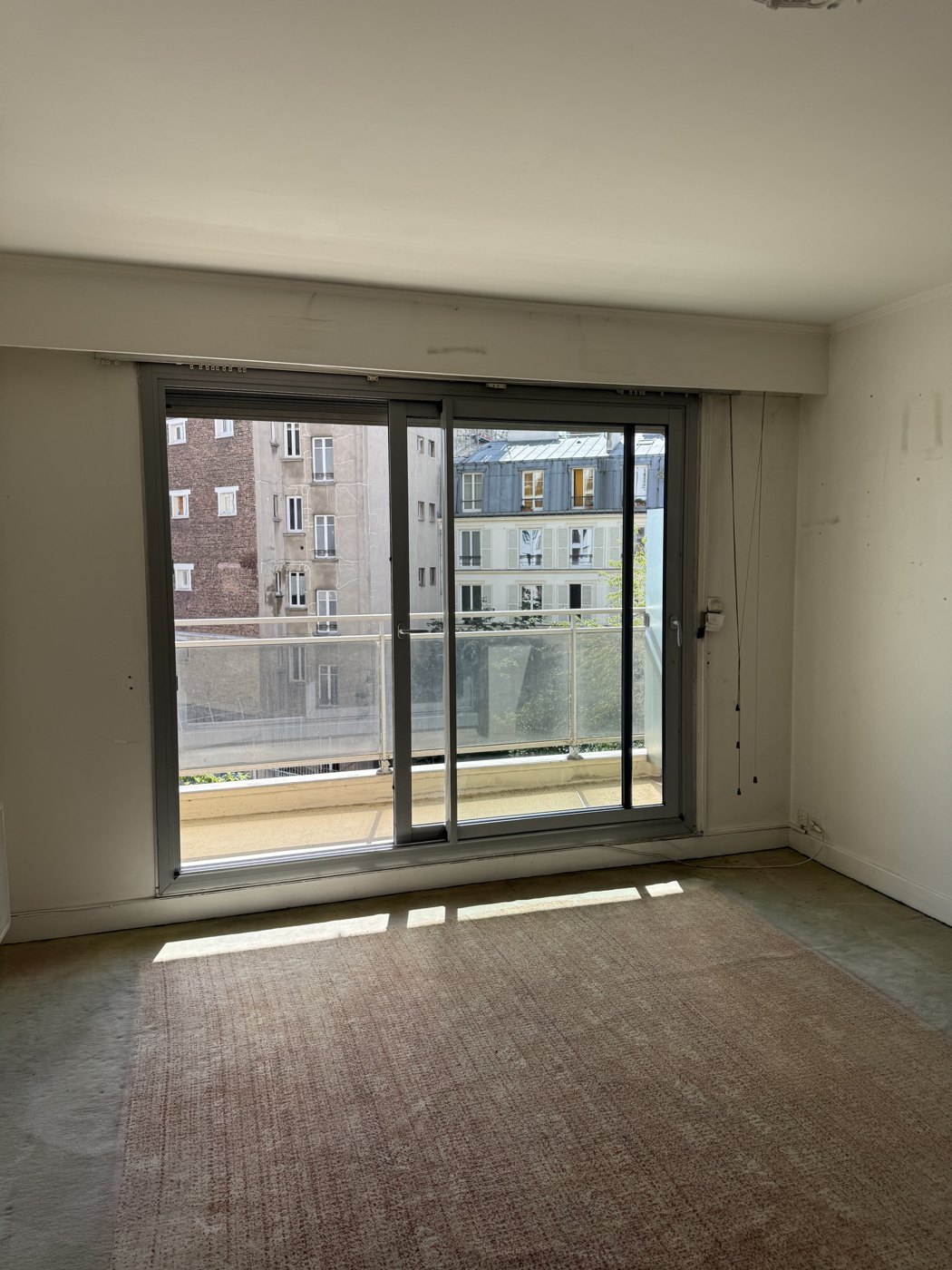
Buying an apartment in Paris that needs work is one of the better ideas available to a buyer at the moment, because the discount on an unmodernised flat is routinely larger than the cost of modernising it.
What stops people is not the money. It is not knowing what they are allowed to do, how long it takes, and who has to agree.
Here is how it actually works.
You are buying into a copropriété
Almost every Paris apartment sits inside a copropriété — the co-ownership that owns the building collectively. You own your apartment outright, and you own a share of everything else: the roof, the façade, the stairs, the lift, the courtyard, the risers.
The copropriété is run by a syndic, a managing agent, and decisions are taken at a general meeting, the assemblée générale, usually held once a year. The rules of the building are set out in the règlement de copropriété, a document your notaire will give you and which you should read before you buy rather than after.
That document decides most of what follows. Two apartments on the same street can have quite different rules.
What you can do without asking anyone
Anything entirely inside your own apartment that does not touch the structure, the common parts or the building's appearance.
New kitchen. New bathroom fittings in the same place. Replastering, painting, new flooring, new internal doors, rewiring within your own walls, new radiators on your own circuit, taking down a non-load-bearing partition, building a new one, fitted storage. In practice this covers the large majority of what a tired apartment needs.
You still have to tell the syndic the dates, and you still have to respect the building's hours for noisy work — usually written into the règlement, and usually weekdays with a break over lunch. Ignoring those hours is the fastest way to make enemies of the people you are about to live among.
What needs the building's agreement
Four things in particular, and they come up constantly.
Anything structural. A load-bearing wall is a common part even though it stands inside your apartment. Removing or piercing one requires a vote at the general meeting, supported by an engineer's report, and the cost of both falls on you. It is routinely granted and it is never quick — if the meeting is in May, your knock-through happens after May.
Anything that changes the appearance from outside. Replacing windows, changing their colour or frame material, glazing in a balcony, putting a unit on the façade or an aerial on the roof. Even where the building wants new windows, it wants them all the same.
Moving wet rooms. Putting a bathroom where there was a bedroom, or moving a kitchen to the other side of the flat, usually means connecting into the building's risers in a new place. That needs permission, and some règlements forbid putting a wet room above a neighbour's living space outright.
Floor coverings. This is the one that catches people. A great many Paris copropriétés require that carpet be replaced only by another floor with equivalent acoustic performance, precisely because pulling up carpet and laying hard flooring transmits every footstep to the flat below. It is enforceable, and it is enforced.
Outside the building's own rules, the city has its own: changing the use of a residential apartment — to a short-term let, or to offices — is a separate authorisation entirely and a serious matter in Paris.
What it costs
The French trade benchmarks for 2026, supply and fit, are these.
A cosmetic refresh — paint, floors, tidying up, new fittings — runs about €150 to €200 a square metre. A partial renovation, replacing a kitchen and bathroom and doing some of the services, is €500 to €1,000 a square metre. A full renovation, stripping back and rebuilding the interior, is €1,000 to €3,000 a square metre, and the trade's own advice is to add around ten per cent for what you find once the walls are open.
Paris sits at the upper end of each of those bands, and it is worth understanding why rather than simply budgeting more. There is nowhere to park a skip or a van. Materials come up in a lift that may be too small, or up six flights. Deliveries need permits. Working hours are restricted. Waste has to be carried out rather than tipped into a container at the door. None of that shows in a quotation as a line item, but all of it is in the price.
For a 67 m² apartment, that puts a refresh in the region of €10,000 to €14,000, a partial renovation at €34,000 to €67,000, and a full one from about €67,000 upwards.
Set that against a quarter where finished apartments change hands at up to €11,000 a square metre and unmodernised ones at under €8,500, and the arithmetic generally favours buying the work.
The energy rating, and whether to chase it
Every apartment carries a DPE, rated A to G, and the rules now bite. A property rated G cannot be let at all, F is banned from 2028 and E from 2034, and selling a property rated E, F or G requires an energy audit to be handed to the buyer.
In a house you improve the rating by insulating, replacing windows and changing the heating. In a Paris apartment with collective heating, most of those levers belong to the building rather than to you. You can improve glazing where the copropriété allows it, insulate an exposed wall internally, and fix ventilation. You cannot unilaterally replace a boiler that heats sixty flats.
So the honest advice is this. If the building has collective heating and a reasonable rating, do not spend heavily chasing a letter. If you intend to let the apartment, check where the rating sits against those dates before you commit, and ask the syndic what major works are planned — because a building about to vote through an insulation programme will improve your rating without you lifting a finger, and will also send you the bill.
Works already voted, and the fund
Two things to establish before you buy, and your notaire will obtain both.
What has been voted and not yet carried out. A façade restoration or a lift replacement agreed at the last general meeting falls on whoever owns the apartment when the calls for funds go out. These are not small sums in Paris.
The fonds de travaux. Most copropriétés are required to build a reserve fund for future works, paid into annually. It is worth knowing what is in it and what it is earmarked for.
Read the minutes of the last three general meetings. They are the most revealing documents in the whole file — you will learn more about the building from the arguments recorded in them than from any survey.
How long it takes
A refresh on an empty apartment: three to five weeks. A partial renovation: two to three months. A full renovation: four to six months, longer if anything structural needs a vote.
The sequence that catches people out is the general meeting. If your project touches a common part, it waits for the next AG, and an extraordinary meeting can be convened but costs money and goodwill. Establish on day one whether you need a vote, because it determines the whole timetable.
Doing it from a distance
Most people buying a Paris apartment as a second home are not in Paris to run the work, and running a renovation remotely through a series of individual trades is where these projects go wrong.
What makes it work is a single point of responsibility: someone who holds the quotations, deals with the syndic, is there when the plasterer is there, and is answerable for the result rather than for their own trade.
That is what we do. French Life Club can take a Paris apartment from empty and tired to finished and furnished, managed start to finish, with one contact and one price — whether or not you bought it through us.
We currently have a three-room apartment of 67.06 m² for sale on Boulevard de Reuilly in the 12th, one minute from Daumesnil métro, with a balcony, a cellar and a parking space, at €570,000 as a private sale with no agency fees. It needs exactly the kind of updating described above, and we can quote for the property and the work together so you know the finished figure before you commit.
See the apartment, or read our guide to the 12th arrondissement.
Book a free half-hour, or reach us on WhatsApp or by email for a same-day reply.