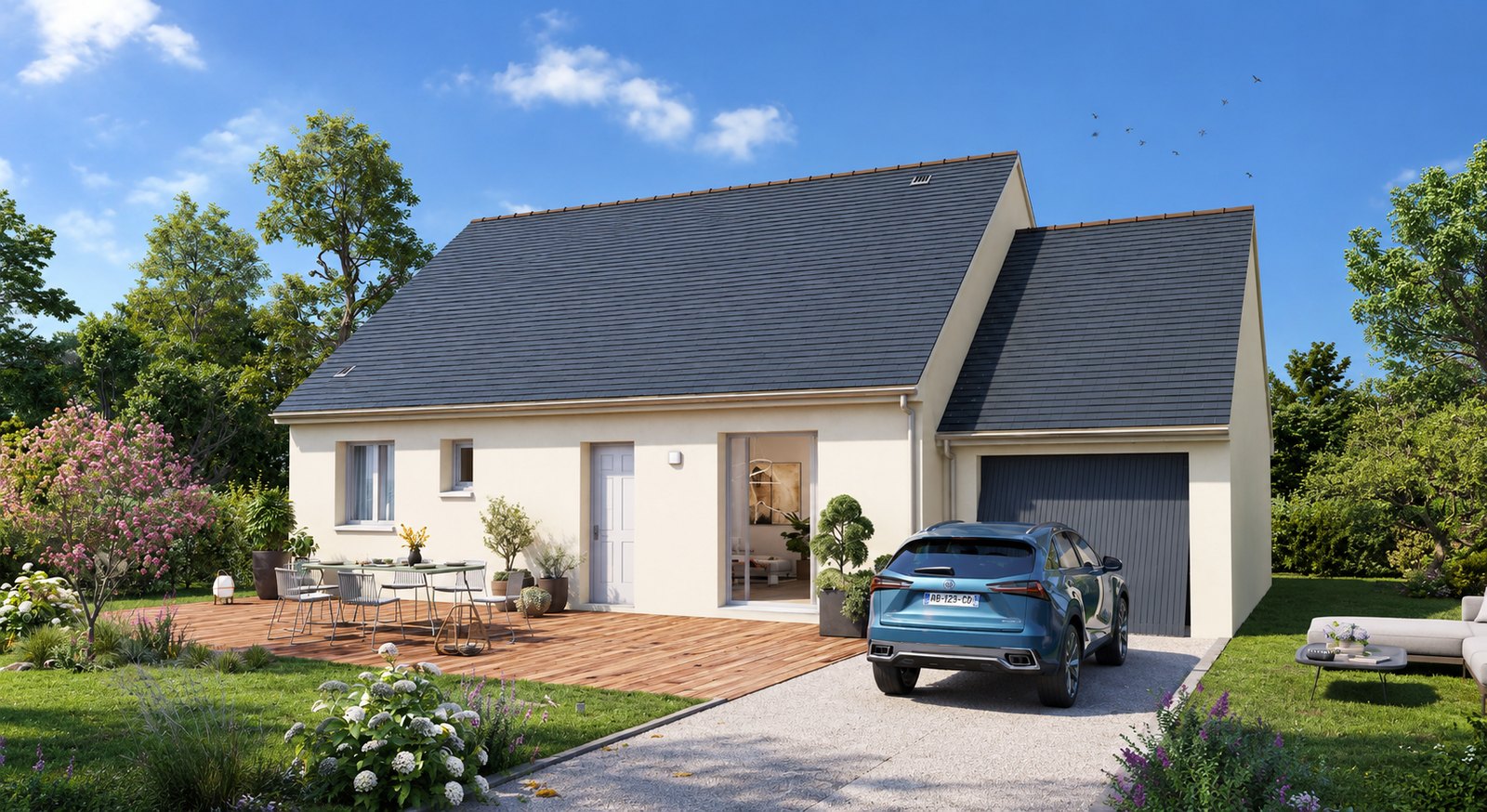
You have found the stone longère. The beams are sound, the roof was done ten years ago, and the price is the reason you started looking at France in the first place.
Then the file from the notaire arrives with a report in it from something called the SPANC, and the word that matters is non conforme.
This is the single most common unpleasant surprise in rural French property, and almost nobody mentions it at the viewing. It is worth understanding before you make an offer, not after.
What ANC actually means
Most of rural France is not connected to a main sewer. Villages have one; isolated houses, hamlets and much of the open countryside do not. Anything not connected runs on assainissement non collectif — ANC, individual sewage treatment. Your own system, in your own ground, treating your own waste water.
If you are buying anything outside a village centre in Brittany, Normandy or the Vendée, assume it has one until you are told otherwise.
A proper ANC system does two jobs. It separates and settles the solids, and it then treats the liquid before returning it to the ground. Older French houses frequently have only the first half — a fosse septique doing the settling and then a pipe to a ditch, a stream, or simply into the field. That was normal in 1975. It has not been legal for a long time.
The inspection, and why the report is already in the file
Every commune has a SPANC — the public service that controls private sewage systems. It inspects each installation on a cycle: by law at least once every ten years, and in practice most communes work to four to eight, with known problem systems seen more often.
When a house is sold, that report must be in the sale file and it must be less than three years old on the day you sign the final deed. If it is older, the seller has to get a fresh inspection. The report is the SPANC's own — not a private surveyor's — and it gives one of a small number of verdicts, from compliant, through acceptable but to be monitored, to non-compliant with proven risk, to no usable installation at all.
Read it. If you read nothing else in the file, read this.
The one-year rule, which is the part that costs money
Here is the bit that catches British and Irish buyers.
If the report says the system is non-compliant, you have one year from the signing of the final deed to put it right. Not the seller — you. The clock starts at the notaire's office and no clause in the contract can remove it.
Note the difference from an existing owner's position. If you already own a house and a routine inspection finds a fault, you normally get four years to carry out the work. Buy that same house and the four years becomes one. Selling is what triggers the short deadline.
Being non-compliant does not stop the sale going through, and plenty of houses change hands this way. What it does is move an unbudgeted five-figure bill to the first twelve months of your new life in France, usually while you are also paying for a new roof or a kitchen.
The other thing to know: nothing in French law says who pays. It is a matter for negotiation, and a non-compliant report is a legitimate and very common reason to go back on price. Get a quote first, then negotiate with the number in your hand.
The five types of system, in plain English
Which one you end up with depends mostly on your soil and the size of your garden, and that is decided by a soil study — an étude de sol, which is obligatory and costs around €300 to €600. It is the first thing to commission, because it determines everything after it.
Fosse toutes eaux with a drainage field. The traditional arrangement and still the most common. A tank settles the waste, then the liquid runs out through perforated pipes buried in gravel trenches, and the soil does the treatment. Cheapest to run — no power, no contract, just emptying. It needs permeable soil and a decent amount of ground, often 60 to 100 square metres of free garden with nothing planted or parked on it.
Sand filter. The answer when the soil will not take it — heavy clay, or rock near the surface, both common in parts of Brittany. An engineered bed of sand does the treatment instead of the natural ground. It works where nothing else will, and it costs more to build.
Compact filter. A sealed unit filled with coconut fibre, zeolite or a similar medium. The treatment happens inside the box rather than in a trench, so it takes a fraction of the space. No electricity. The medium has to be replaced every ten to fifteen years, at roughly €800 to €2,000.
Micro-station. A small powered treatment plant. It takes the least room of all and handles a small plot well, but it needs a permanent electricity supply, it does not like being left empty for months — which matters if the house is a holiday home — and it generally requires a maintenance contract.
Reed bed. Planted filters doing the treatment biologically. Attractive, low-energy, popular with people who want the greenest option, and it needs space and the right situation.
What it costs in 2026
Round figures, installed, as the French market stands this year.
A fosse toutes eaux with a drainage field runs about €3,000 to €8,000. A compact filter is roughly €5,000 to €11,000. A micro-station is around €6,000 to €12,000, and a reed bed similar. Add the soil study on top of all of them.
In practice, a full replacement on an old property — digging out whatever is there, taking it away, and installing a new system in a garden with mature trees and a terrace in the wrong place — commonly lands between €8,000 and €15,000. Replacement costs more than a first installation for the obvious reason: somebody has to undo the old one and make good afterwards.
Then there is the running cost, which is modest. Emptying is around €150 to €300 every two to four years. A micro-station's maintenance contract is roughly €100 to €250 a year.
And the cost of doing nothing, which is real. A commune can apply a penalty charge equal to the sewer fee you would have paid if you were connected, and may increase it by up to 400 per cent — several hundred euros a year in some areas. Where a faulty system is shown to be polluting, the law allows fines running to tens of thousands.
The help that exists, and the trap in it
There is genuine financial help, and it is worth having.
The éco-prêt à taux zéro lends up to €10,000 interest-free for rehabilitating a non-compliant system, over as much as fifteen years, with no income limit. The house has to be more than two years old and the work done by a qualified firm.
VAT at 10 per cent instead of 20 applies to both materials and labour on a house more than two years old. On a €7,000 job that is around €700 saved, and the firm handles the paperwork.
Some agences de l'eau, communes and departments run grant schemes, usually tied to a collective programme organised by the local SPANC. Whether anything is running in your commune this year is a question for the SPANC directly, and the answer varies enormously.
The trap: almost all of it has to be applied for before the work starts. Sign a builder's quote, let them dig, and you have disqualified yourself. Ask the SPANC what is available at the same time as you ask for the inspection report.
Before you make an offer
Ask for the SPANC report before you offer, not after. Ask the agent directly; it is a document the seller is obliged to have.
If it is non-compliant, get a quote from a local assainissement firm before you commit to a price. They will look at the ground and give you a realistic figure, and that figure belongs in the negotiation.
Look at the garden with the drainage field in mind — where would 80 square metres of undisturbed ground actually go, with no trees, no terrace and no parking on top of it. On a small plot the cheap option may simply not be available to you.
And ask the SPANC what grant programme is running before anybody starts work.
The reason this does not come up on a new build
Worth saying plainly, since it is what we do. A new house is designed with its treatment system from the outset. The soil study is done before the plans are drawn, the system is sized for the house, it is installed under the building contract, it is signed off by the SPANC as part of completion, and it is covered by the guarantees that come with the build. There is no inspection report to worry about, no year-one deadline and no five-figure surprise.
That is not an argument against buying an old house. Plenty of people buy one knowing exactly what the sewage system will cost and go in with their eyes open, which is the right way to do it. It is an argument for finding out what you are taking on before you sign, because this is the item that most often turns a bargain into something else.
Our free guide goes through the costs of building new in the same detail — the contract, the stage payments, the guarantees and what is and is not included. Download it here; there is nothing to pay.
If you would rather talk it through, book a free half-hour or message us on WhatsApp or by email. We are happy to look at a SPANC report and tell you honestly what it means, whether or not you end up building with us. Current house and land packages across Brittany, Normandy and the Vendée are listed with all-in prices.
Rules, costs and grant schemes checked in October 2026 and they do change. We are builders, not a sanitation firm or a legal adviser: use this to ask the right questions of your SPANC and a local installer rather than as a substitute for their advice.