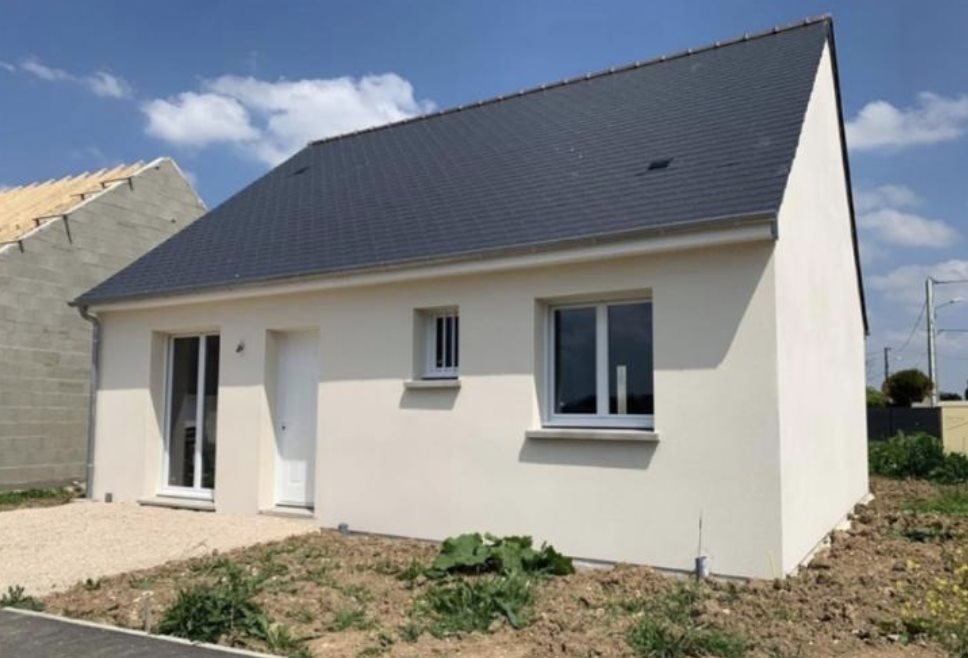
People interrogate the purchase price for months. Almost nobody asks what the house costs to own once it is standing, and that is the number that decides whether you keep it for twenty years or sell it in four.
So here is the annual cost of a new house in Brittany, Normandy or the Vendée, line by line, with the exemptions that apply and the two or three places where people get a nasty surprise.
Taxe foncière: the one bill nobody escapes
Taxe foncière is the land and buildings tax, paid by whoever owns the property on 1 January, whether they live in it, let it or leave it empty. It arrives in the autumn and it is due in October.
It is not a percentage of what you paid. It is worked out from the valeur locative cadastrale — a theoretical annual rent the tax office attributes to the property, based on its surface, its standard of construction and its fittings — multiplied by rates set every year by the commune and the department. Two identical houses forty kilometres apart can therefore carry quite different bills, and nobody can tell you the figure before the house exists.
New builds get two years free. A newly built house used as a dwelling is exempt from taxe foncière for two years, starting on 1 January of the year after the works are finished. It is worth real money and it is not automatic: you have to declare the completed building within 90 days of the end of the works, online in your espace particulier at impots.gouv.fr under "Biens immobiliers", or on the paper form H1 if you cannot file online. Miss the window and you can lose the exemption altogether.
Two things to know about it. A commune or an intercommunal authority can vote to cut back its own share of that exemption, so "two years free" means two years free of the parts the local council has not reclaimed. And the exemption never covers the bin tax — the taxe d'enlèvement des ordures ménagères, which is collected on the same bill and keeps coming from year one.
Taxe d'habitation: only if it is not your main home
The occupier's tax was abolished on main residences in 2023. If the house is where you live, you do not pay it at all.
If it is a second home, you do. The taxe d'habitation sur les résidences secondaires survived the reform untouched, it is calculated off the same cadastral rental value, and it is assessed on whoever has the house furnished and available on 1 January. For most of our buyers it lands in the same broad range as the taxe foncière, which is why a second home carries roughly double the annual tax bill of a main home.
There is a surcharge to watch. Communes in designated high-demand areas can vote to add between 5% and 60% to the second-home tax. This used to be a big-city matter, but a decree in August 2023 extended the list of eligible communes by more than two thousand, to around 3,700, and it caught a great many small coastal towns — the sort of place with more holiday homes than permanent residents. Plenty of them have never voted the surcharge in. Some have.
The practical point: if you are buying on the coast as a second home, ask at the mairie whether the commune has voted a majoration, and at what rate, before you commit. It is a two-minute question and it occasionally moves the annual cost by several hundred euros. Inland, in the bocage and in central Brittany, it is almost never an issue.
Heating and electricity: where a new build pays you back
This is the line where a new house stops being a purchase and starts being a saving.
The regulated electricity tariff in France sat at around €0.20 per kilowatt hour in October 2026, with a standing charge of roughly €190 a year on the usual 6 kVA meter. Those are the same numbers for everybody. What differs is how many kilowatt hours the building needs.
A house built to RE2020, France's current energy standard, is insulated to a level that older stone and rendered houses simply are not, and it is heated by an air-source heat pump rather than oil or electric panels. Heating one of our bungalows costs €30 to €35 a month, all year round. Add cooking, hot water, lighting and the standing charge and the whole electricity account on a typical three-bedroom bungalow comes to something in the region of €70 to €90 a month.
Compare that with the honest figure for an uninsulated longère of the same size, where €250 a month through the winter is normal and oil deliveries arrive on top. Over ten years the gap pays for a good deal of house. We go through the standard in detail in RE2020 explained and the construction side in how we build.
Water, and the question of drains
Mains water in France averaged €4.89 a cubic metre at the last national count, which puts a household using 120 cubic metres a year at a little under €600. A couple using the house for part of the year will pay a good deal less, though the standing charge continues whether you are there or not.
The thing to establish before you buy a plot is drainage. A serviced plot on mains drainage simply connects. A plot without it needs its own treatment system — a fosse septique with a filter bed — which is a one-off cost inside the build and then a pump-out every four years or so. Neither is a problem. Not knowing which one you have is.
Insurance, and the cover you do not have to buy
Household insurance on a new house is cheaper than on an old one, for the obvious reason that nothing in it is about to fail. For a three-bedroom bungalow, budget a few hundred euros a year for buildings and contents cover, and tell the insurer it is a second home if it is one, because an unoccupied house is rated differently and an undeclared one can be a reason to refuse a claim.
What you are not insuring is the building itself. Every house we build is sold under a CCMI contract and carries the ten-year structural guarantee, backed by dommages-ouvrage insurance taken out before the first block is laid. A structural defect in year seven is the builder's insurer's problem, not a line in your household budget. Owners of old houses have no equivalent, which is why their repair fund has to be real.
Internet, and the small stuff
Fibre has reached most of the communes we build in, and a full fibre package with a landline runs at around €30 a month. Mobile coverage inland in Brittany and the Manche is good. Rubbish collection is in the taxe foncière bill. A chaufferie contract, a chimney sweep certificate, a boiler service — none of these apply to a heat pump beyond a simple annual check.
Putting a number on it
As a planning figure rather than a quote, for a new three-bedroom bungalow in rural Brittany, Normandy or the Vendée:
- As your main home, allow somewhere between €1,700 and €2,500 a year for everything above, with taxe foncière and electricity the two biggest lines.
- As a second home, allow €2,500 to €3,500, the difference being the taxe d'habitation and a slightly higher insurance premium.
- In both cases year one and year two are cheaper, because the taxe foncière exemption is running.
The honest caveat is that the two tax lines depend entirely on your commune's rates and on the cadastral value the tax office puts on your house, and nobody can quote those in advance. Everything else on the list is predictable to within a few euros a month, which is rather the point of building new.
In one paragraph
A new house in these three regions costs most owners somewhere between €1,700 and €3,500 a year to run, the top of that range being a second home paying the taxe d'habitation as well as the taxe foncière. New builds are exempt from taxe foncière for two years provided you declare the completed house within 90 days, though the bin tax still arrives. Heating is the line where the modern standard shows: €30 to €35 a month against €250 for an old house in January. Water, insurance and fibre are modest and predictable. The surprises, when they come, are a coastal commune's second-home surcharge and a plot without mains drainage — and both can be checked before you sign anything.
Our free guide sets out the build cost, the contract and the stage payments in the same plain way. Download it here, there is nothing to pay. Current house and land packages across Brittany, Normandy and the Vendée are listed with all-inclusive prices, or book a free 30-minute call and we will go through the likely annual bills for a specific commune.
Tax rules and tariffs checked in October 2026. Taxe foncière and taxe d'habitation amounts depend on local rates and on the cadastral value of your own property: treat the ranges above as planning figures, not quotations, and confirm your position with your local tax office or a French accountant.