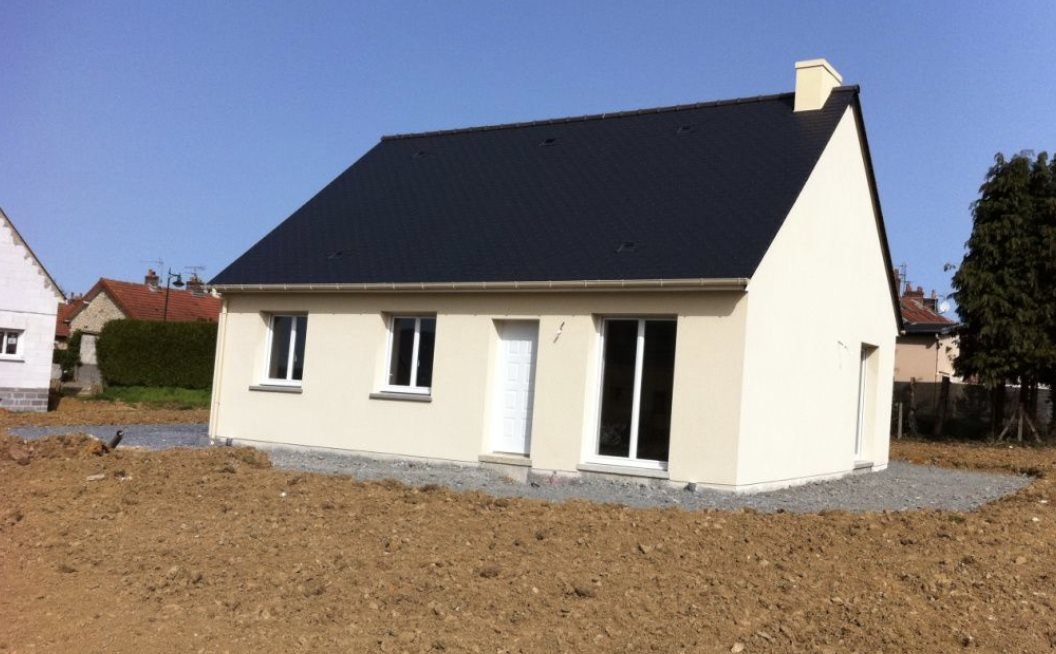
Almost every new owner does the same thing. They arrive, they look at the open garden, and they think: first job, put a fence up.
In most countries that is a Saturday and a trip to the builders' merchant. In France it is a thing the commune has an opinion about, and the opinion is written down.
Get it wrong and you can be made to take the fence down again. Get the hedge wrong and your neighbour can have it dug up, years later, entirely lawfully. None of this is difficult, but all of it is worth knowing before you spend the money.
You have the right to enclose your land, but not however you like
Start with the good news. French law gives every owner the right to enclose their property. Nobody can stop you fencing your own garden in principle.
What is regulated is what the fence looks like and how tall it is, and that is decided locally rather than nationally. Which is why there is no single answer to "how high can my fence be in France" — the answer depends on the commune, and sometimes on the street.
The document that holds the answer is the PLU, the plan local d'urbanisme. Every build, every extension and in most places every fence is judged against it.
How to find your PLU and read the part that matters
This is easier than it sounds, and you can do it from your kitchen table before you even own the house.
Go to geoportail-urbanisme.gouv.fr. Search for your commune. Click on your plot on the map. It will show you which zone you are in — a code such as UB, UC, A or N — and let you download the règlement, the rulebook.
The règlement is organised by zone and then by article. Find your zone, then look for the article on the external appearance of buildings and the treatment of boundaries. In most PLUs it is article 11, and the section on clôtures is usually half a page. That half page is the whole answer: maximum height, what the fence may be made of, whether a solid wall is allowed or only an open fence on a low base, sometimes even the permitted colours, and occasionally the hedging species the commune wants or forbids.
Two things to check while you are there. Look at the date of the document and whether a revision is under way, because PLUs are amended often. And look in the annexes for heritage perimeters, because being near a listed building changes everything, as we will come to.
If your commune is not on the Géoportail, it may sit under an intercommunal plan, a simpler carte communale, or the national rules. The urbanism desk at the mairie will tell you in one phone call, and they are used to the question.
If you are buying a plot and the fence matters to you, do this before you sign. It takes ten minutes.
When you need permission
A fence is not automatically subject to a planning formality. It becomes one in these situations, and they are common enough that you should assume you need to check.
Where the commune has decided to require it. A council can pass a resolution making every fence subject to a déclaration préalable. Plenty have, particularly in towns and villages with a conservation interest. There is no national list; the mairie knows.
Where the PLU says so, independently of any council resolution.
In a protected area. Within the vicinity of a monument historique, in a site patrimonial remarquable, or a listed or registered site, the formality applies and the Architecte des Bâtiments de France gets a say.
And for any wall of two metres or more, which is subject to a declaration everywhere in France regardless of what the commune has decided.
The form is a déclaration préalable, Cerfa 16702, with a location plan, a site plan, a drawing of the fence showing its height and materials, and photographs of the existing situation. The mairie has one month to answer, or two if the heritage architect is involved. Silence at the end of that period counts as consent, though it is worth asking for a written certificate confirming it.
Building without the declaration where one was needed exposes you to a fine and an order to put things right, which in the worst case means taking the fence down at your own cost.
One more layer, easily missed. If your house is in a lotissement — a planned development — there may be a cahier des charges, a private set of rules agreed between the plot owners. It can be stricter than the PLU, it binds you contractually, and it has nothing to do with the mairie. Ask the notaire for it.
How high
Where the PLU sets a limit, that is your limit, and in practice it is usually 1.80 or 2 metres.
Where there is no local rule at all, the general position in a built-up area is 2 metres.
Boundary walls between neighbours have their own old rules in the Code civil, which set the height a neighbour can be compelled to contribute to — higher in large towns than in small ones. In ordinary practice, for an ordinary garden, the PLU figure is the one that governs you.
Hedges: the rule that catches almost everybody
Here is the one that causes the most trouble, and it is nothing to do with planning. It is in the Code civil, it has been there since 1804, and it is enforced.
If a planting will be more than two metres tall, it must be at least two metres from the boundary.
If it will be two metres or less, it must be at least half a metre from the boundary.
Two details matter enormously.
The distance is measured from the boundary line itself, not from your fence, and not from the edge of the foliage. If your fence sits a little inside your land, the hedge planted against it may already be too close.
And it is the height the plant reaches, not the height on the day you plant it. A laurel put in at 80 centimetres, half a metre from the line, is perfectly legal on the day and becomes unlawful the summer it passes two metres. People plant a neat little screen and create a problem for themselves five years later without touching it again.
Local custom and local rules can displace these distances where a genuine established usage exists, so the PLU and the mairie are worth asking. But assume the Code civil figures apply unless you are told otherwise.
What your neighbour can make you do, and what you can do yourself
If a hedge or tree is planted too close, your neighbour can require it to be dug up, or cut back to the lawful height. The choice between the two belongs to you as the owner of the planting, not to them.
If branches overhang the boundary, your neighbour can require you to cut them back. This applies whether or not the planting itself is lawfully positioned, and the right never expires. They cannot cut your branches themselves.
If roots or brambles cross the line, they may cut those themselves, up to the boundary, without asking you.
After thirty years, a planting that is too close can no longer be ordered removed. But the clock runs from when it passed two metres, not from when it went in, and whoever claims it has to prove the height thirty years ago — so dated photographs are worth keeping. And even after thirty years, the obligation to cut back overhanging branches remains.
All of which is a long way of saying: get the distance right at planting, and none of it ever applies to you.
When you may and may not cut
A binding ban on cutting hedges between 16 March and 15 August applies to farmers receiving CAP payments. It is a condition of their subsidy and it is enforced.
For a private garden there is no equivalent blanket ban, but the national biodiversity office advises everybody to avoid that window, and the sensible working season is September to February.
That advice has teeth in one specific case. Destroying the active nest of a protected bird species is an offence under environmental law whoever you are, and most of the small birds in a French garden hedge are protected. In practice: if you cut in spring and there are nests in it, you have a real problem. Cut in autumn and you never will.
What it costs, and what we do
Fencing is not included in a turnkey house price — not ours, and not anybody's. It belongs in your budget from the start, along with the terrace, the garden and the development tax.
We do fencing as a job in its own right, start to finish, and not only for people who have built with us. If you own a house anywhere in France and you want the boundary done properly, that is work we take on: reading the PLU, lodging the declaration if one is needed, and putting the fence in.
That first part is the part people underestimate. It is also the part that costs nothing to get right and a great deal to get wrong.
Before you order a single panel
Look up your plot on the Géoportail and read the boundary paragraph in your zone's règlement. Ring the mairie and ask the one question that the document will not answer: does this commune require a déclaration préalable for a clôture? Ask the notaire whether there is a lotissement cahier des charges. And if you are planting rather than building, measure from the boundary line, assume the plant will exceed two metres, and give it the two metres.
Our free guide covers the costs of building new in the same detail — the contract, the stage payments, the guarantees and what is and is not included. Download it here; there is nothing to pay.
If you would like us to look at a boundary, book a free half-hour or send us a message on WhatsApp or by email. Current house and land packages across Brittany, Normandy and the Vendée are listed with all-in prices, and the specification of what comes as standard is on our how we build page.
Rules checked in October 2026. Planning rules are local and change: the règlement for your own commune, and the urbanism desk at your own mairie, are the authority on your own plot. We are builders rather than lawyers, and on a boundary dispute with a neighbour you should take proper legal advice.